ZB-042 RFQs: Identify the Weighed Bottle Scope
For a ZB-042 bottle-weight RFQ, ask the supplier to define the physical scope behind its printed weight field. Identify whether the stated figure concerns the bottle body, an assembly with other components or another described unit. Connect that definition to the actual offered version and supporting manufacturer record rather than assigning a net or gross meaning from the catalogue illustration.
When sourcing wholesale PET injection-molded bottles, a short weight field can look complete while leaving the quoted component boundary unclear. Purchasing needs to know what the figure describes before comparing offers. A model-specific weight-scope request makes that question concrete without treating a supplier-published value as an independently observed measurement.
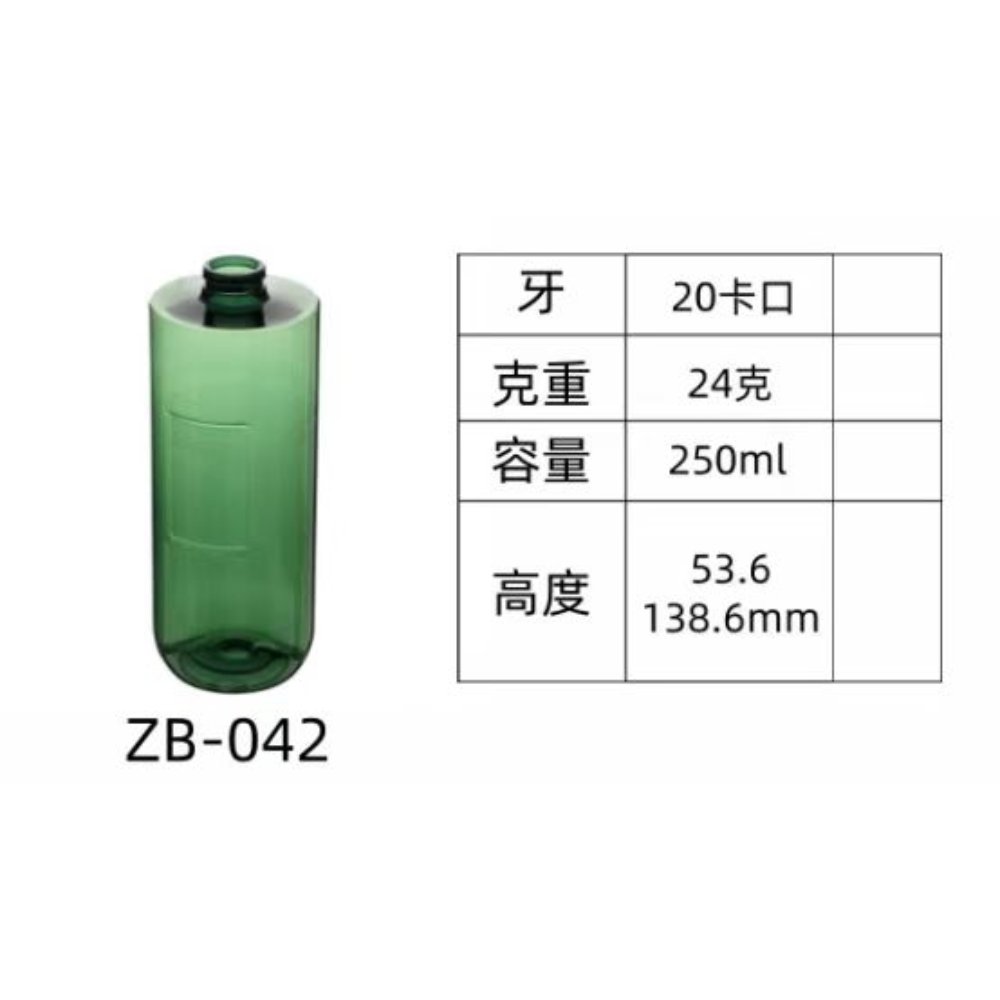
Official ZB-042 specification illustration. The printed weight field is a supplier statement; request the actual physical scope and record basis for the offered version.
Use the ZB-042 field as the starting reference
The official ZB-042 catalogue illustration shows a green bottle beside a supplier-printed table. The table includes the wording 克重 24克. Retain that as the catalogue statement being discussed and ask the supplier to identify the exact offered bottle version to which it applies. The printed field is a useful inquiry reference, not a definition of the complete weighed assembly.
Request the supplier item or version identifier and an identified sample or other reference for its reply. Keep the ZB-042 image linked to that response. A related product card and specification illustration can identify the catalogue discussion, while the actual offer still needs its own manufacturer explanation of what the weight statement covers.
Ask what physical items the statement includes
Ask the supplier to describe the physical unit behind the weight field. Request a clear distinction between the bottle body and any closure or other component included in that unit. These are alternatives for the supplier to explain, not contents that should be assumed from the catalogue image. Keep the description alongside the value in the purchasing schedule.
Also ask whether the statement excludes or includes any packing or other proposed delivery items. A commercial shipment and a component-weight reference can have different boundaries. The supplier reply should state which boundary is intended rather than leaving the buyer to label the figure net or gross. Where the offered supply contains separate parts, ask how the weight reference relates to those quotation lines.
Buying field
Requested supplier response
Model reference
Actual offered ZB-042 item or version and the identified sample.
Published field
Supplier explanation of the printed weight wording and its intended basis.
Physical scope
Bottle body, included closure or other manufacturer-described assembly.
Excluded items
Components or packing outside the stated weight scope, clearly identified.
Record context
Manufacturer explanation of whether the figure is a stated nominal reference or belongs to an identified measurement record.
Supporting document
Applicable supplier record, revision and relationship to the offered sample.
Accepted offer
Agreed field definition retained with the quotation and supplied-unit description.
Separate ZB-035 catalogue bottle. Its specification fields do not establish the ZB-042 weighed unit or included components.
Keep the other bottle records separate
The clear bottle above is the separate ZB-035 catalogue product. Its supplier-printed fields do not define the ZB-042 weighed unit. Keep those product references distinguishable when comparing a bottle range. A similar table layout can make two specification records easy to read together, but it does not establish shared component scope or an interchangeable weight statement.
Ask the supplier to identify the model on each record it sends. If it proposes another bottle as an alternative, request a separate offer and its own field definition. Do not use a figure from that alternative to fill an unanswered ZB-042 question. The useful comparison retains both the declared value and the physical scope for each actual proposal.
Request the context of the manufacturer record
Ask the supplier whether the catalogue figure is a nominal reference, an actual recorded sample result or another manufacturer-defined statement. Retain the terminology it uses and request the supporting reference where available. A buyer should not turn a printed catalogue field into a measured result simply because a precise-looking number is shown beside the product.
If an identified measurement record is provided, ask which sample and component scope it represents. Keep the document reference and applicable version together with the supplier explanation. Where an additional purchasing requirement needs to be agreed, identify it separately rather than inventing a tolerance or converting a catalogue value into an acceptance limit without a supplier response.
Separate ZB-050 catalogue bottle. Its printed fields do not transfer to the ZB-042 weight or supply scope.
Align the weight definition with the offered supply unit
The pink bottle above is the separate ZB-050 catalogue product. Its appearance and printed specification table are another model reference, not a statement about ZB-042 contents or mass. Keep its information separate if considering an alternative offer. This helps the buyer compare supplier proposals without transferring fields between different bottle versions.
Before accepting the ZB-042 quotation, compare the manufacturer weight-scope reply with the actual supplied-unit description. Ask the supplier to resolve any difference in the bottle or component references and retain the accepted document revision. For a repeat order, request clarification when the offered version or included assembly changes. A weight-scope agreement defines the statement being purchased against; it does not establish strength, closure compatibility or other product performance.
Buyer FAQ
Does the printed 24克 field establish an independently measured bottle mass?
Treat it as the supplier catalogue statement. Ask the manufacturer to identify its intended basis and any applicable sample or record.
Should the field automatically be called net or gross weight?
Request the supplier definition of the physical scope, including or excluding other items as it actually declares. Do not assign those labels from the illustration alone.
Can another ZB model supply the missing assembly definition?
Keep each model record separate. Request the definition applicable to the actual offered ZB-042 version.
What should change when the quoted assembly changes?
Ask for the updated weight-scope and component references and align them with the revised quotation and sample relationship.
Identify the inquiry with the ZB-042 catalogue reference, review the bottle catalogue and request the manufacturer weight-scope explanation through the supplier website.
Identify the actual offered ZB-042 version.
Request the physical scope and context of the printed weight field.
Retain the manufacturer record with the quotation and supplied-unit description.
wholesale pet injection-molded bottlesB2B supplier sample record